The hidden health crisis in our pipes
How plumbers can equip customers with cleaner, safer water.
By Sarah Krupa

da-kuk / Vetta / Via Getty Images
As a plumber, your customers rely on you to keep their home systems running smoothly. But what if you could provide them with something even more valuable – the peace of mind that comes with truly clean water?
Water quality issues are more widespread than most Americans realize. Case in point: one in four Americans drink water that isn’t safe* and nearly half of all tap water has PFAs (human-made “forever chemicals that don’t break down)**.
With these growing concerns, plumbers are uniquely positioned to help. While many homeowners may trust their water because it looks clean, that false sense of security puts them at risk. Becoming better educated about water quality issues helps you provide the right guidance to your customers, so you ultimately become a trusted advisor for all their water questions. This is especially important, since invisible water threats lurking in pipes like PFAS, microplastics, VOCS and more slip past older water treatment systems and are what plumbing pros like yourselves are uniquely positioned to address.
By developing expertise in water quality issues and becoming familiar with home water filtration solutions, you can supplement your plumbing knowledge with the ability to safeguard your customers’ health, while also creating a new revenue stream for your business.
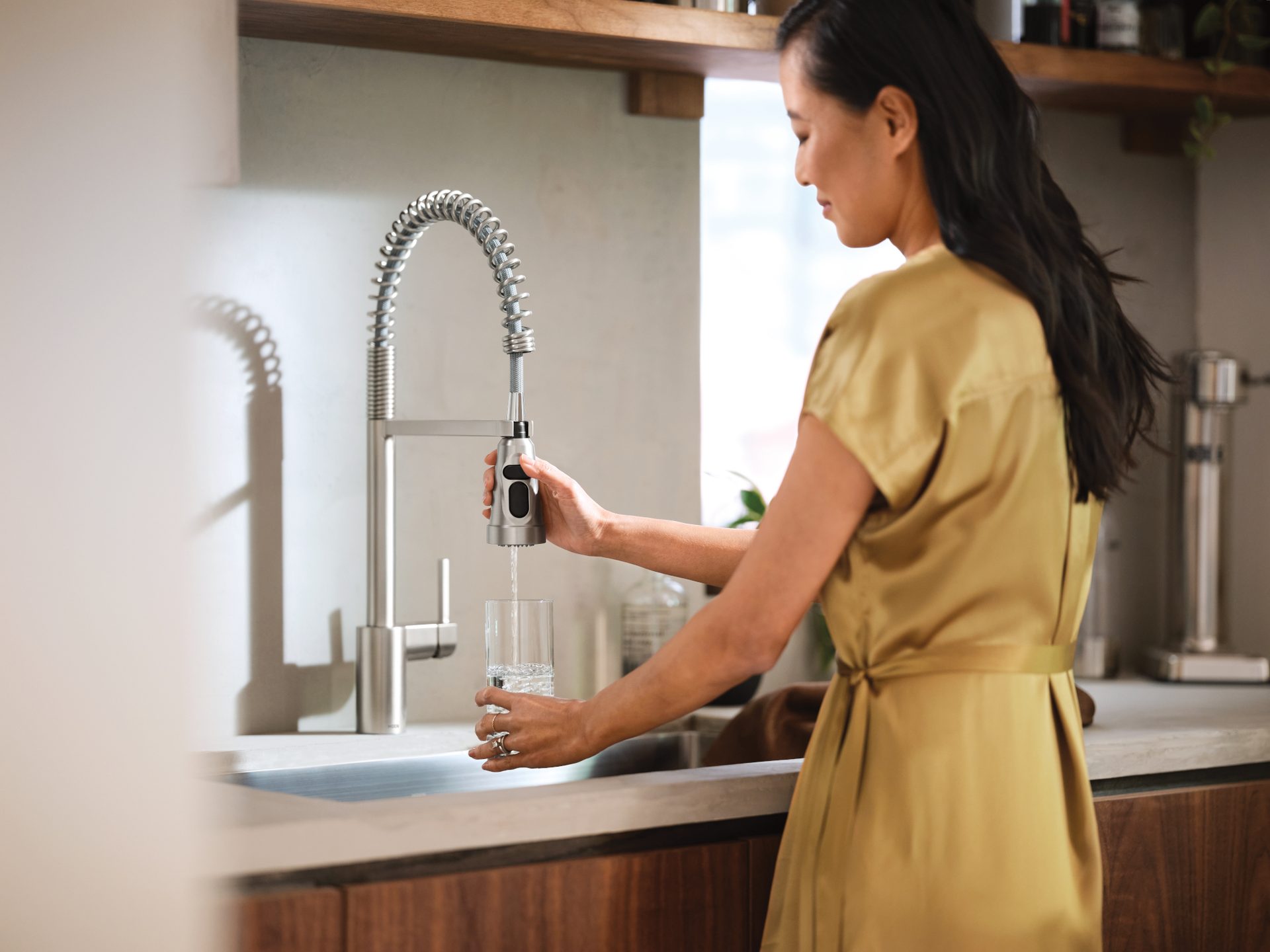
Suppliers should stock National Sanitation Foundation (NSF) certified filtration systems and trade organizations can offer water safety training to their members. Photo courtesy of Moen
Spotting red flags and connecting the dots
Customers usually call for symptoms they can see: a sputtering dishwasher, chalky buildup on showerheads, or a strange smell at the tap. But these visible issues often indicate deeper water quality problems.
As the expert, you understand that the water journey from the main to the faucet can introduce invisible risks. Here are the three common customer complaints and how they instantly signal the need for a water quality solution:
- Chalky residue on faucets = hard water: That white buildup isn't just cosmetic, it’s mineral scale forming inside customers’ pipes and appliances, slowly constricting water flow and damaging the fixtures.
- Funny taste or smell = chemical or bacterial issues: An odor like chlorine or rotten eggs isn't normal. It means chemicals, gases, or even bacteria could be in the water supply, and a warning sign that the water isn’t as clear as it appears.
- Appliance breakdowns or low pressure = hidden sediment and scale: When a water heater fails early on or its pressure drops, it's regularly due to hidden sediment, rust or scale accumulation throughout the plumbing system.
Fortunately, new filtration technologies can combat these hidden threats. The key is connecting the symptom to the solution — and helping customers understand how clean water protects both their health and their homes.
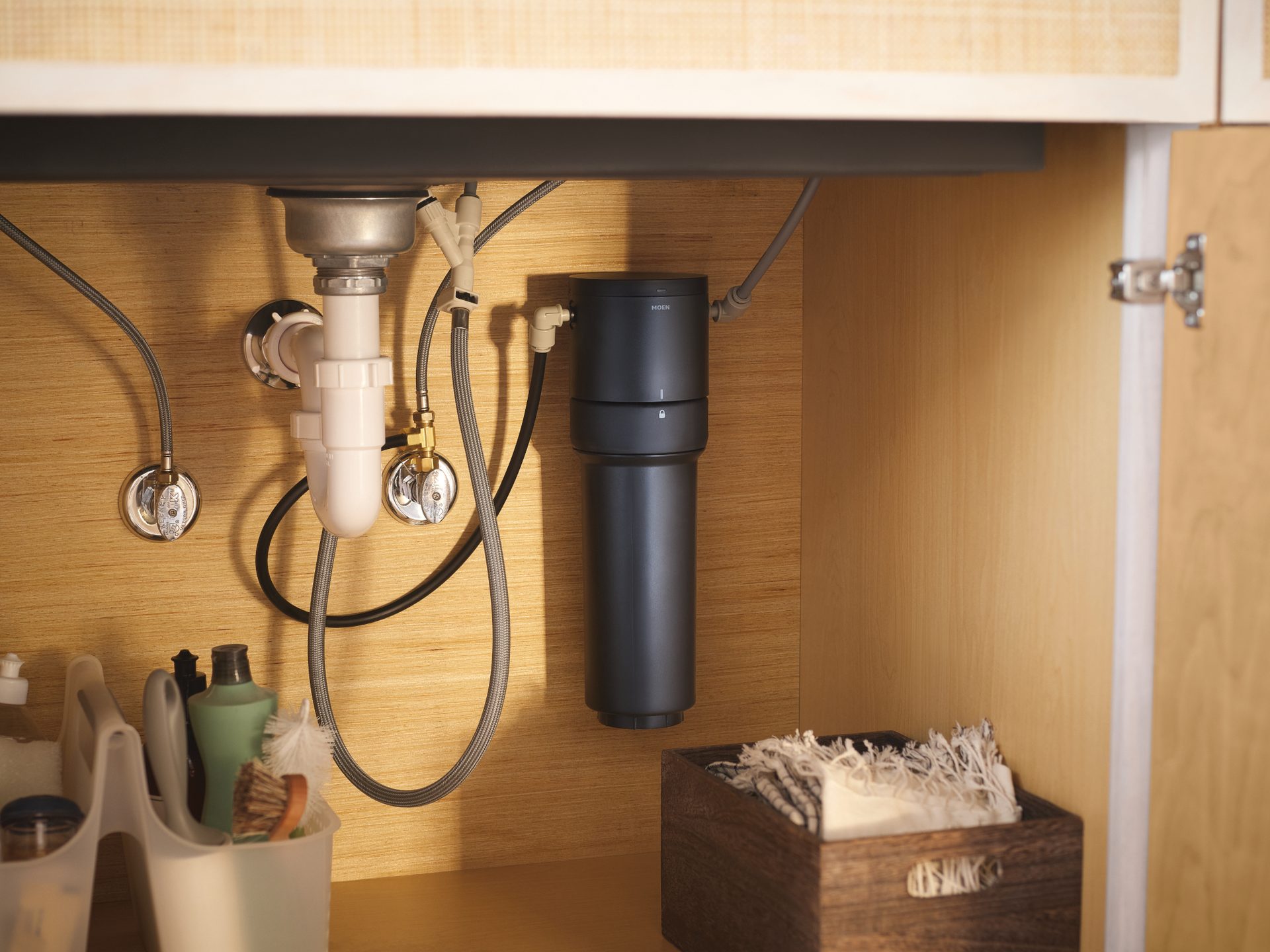
Moen's under sink filtration system removes over 70 potentially harmful contaminants, including lead, mercury and pesticides. Photo courtesy of Moen
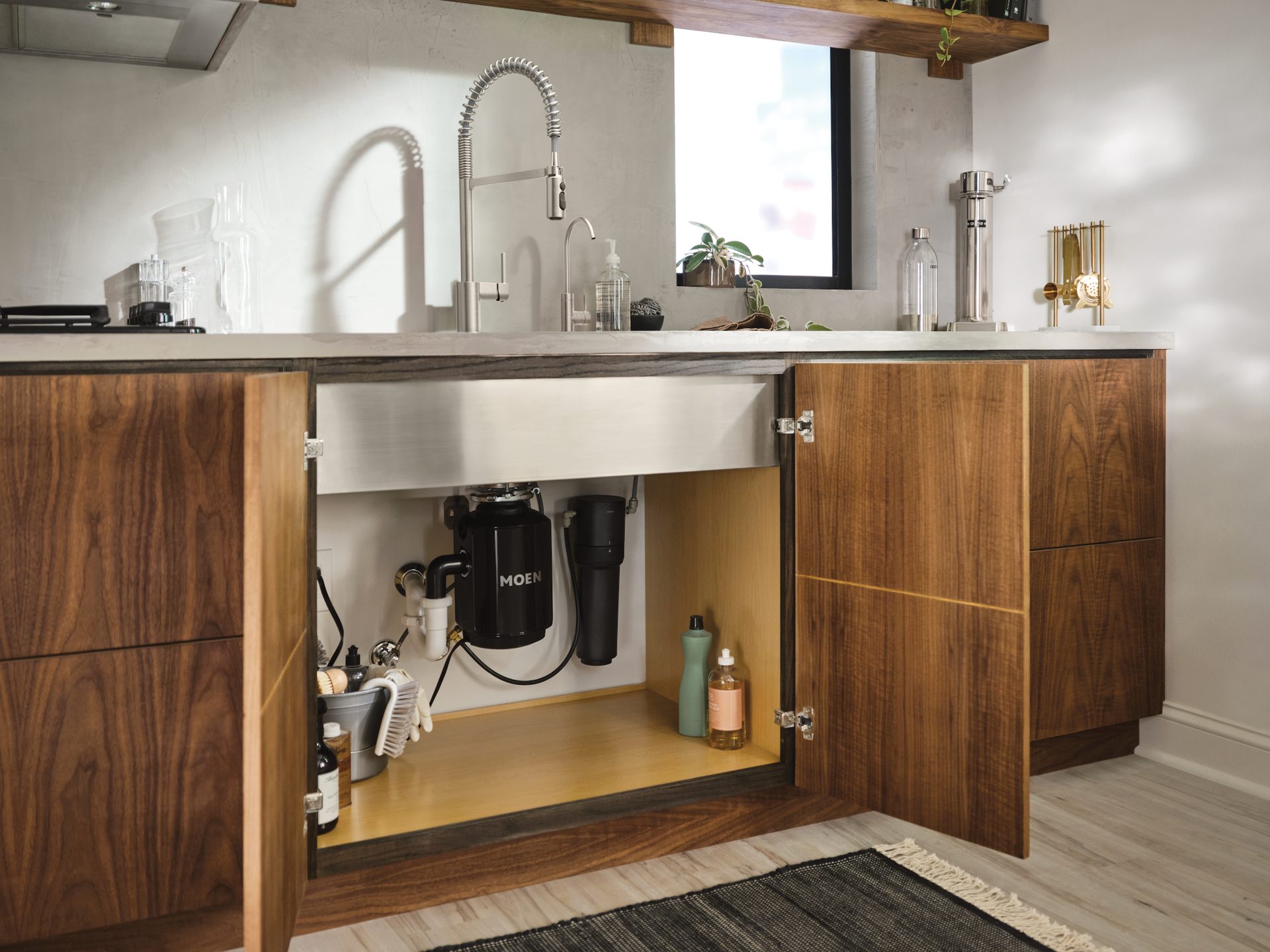
Next steps for the trade
Every customer service call is an opportunity to begin a conversation about water quality. Also, if customers are simply unsure of what is lurking in their water, testing it will always give the most accurate results and help determine the right solution. For instance:
Are you replacing corroded pipes? Solution: Offer to test customers’ water to check pH levels and identify the source of corrosion. You can use an at-home test kit or send a collected sample to a lab for a full analysis of contaminants such as lead, bacteria and minerals.
- Pro tip #1: Before officially testing the water, keep in mind that a metallic taste or blue-green stains on fixtures are a sign of low pH and pipe corrosion. This could mean copper, iron, or other heavy metals are leaching into the water.
- Pro tip #2: Sediments, cloudy water, or rusty appearances can indicate the presence of rust, dirt, or other sediments in the water. One filtration option to recommend to these customers after water testing is a sediment filter. This is a great first step to protect plumbing and address cloudy water with visible particles.
Fixing an appliance? Solution: suggest a water softener or whole home filtration system to prevent future damage. Soft water protects appliances and reduces scale-related breakdowns.
- Pro tip #1: Water softeners use ion exchange to remove hardness-causing minerals. This helps prevent scale, reduces spotting and extends the life of appliances.
- Pro tip #2: Whole-home filtration systems treat water at the point of entry, protecting everything — drinking water, bathing water and all water-fed appliances.
For customers on private wells, whole-home well filtration can address iron, manganese and other contaminants, and systems with daily backwash cycles help maintain long-term performance.
Installing a new kitchen faucet?
Solution: recommend a reverse osmosis filtration system or an advanced carbon filtration system for cleaner, safer drinking water.
- Pro tip #1: Reverse osmosis systems — target contaminants including arsenic, lead, mercury, chlorine and more, reducing over 95% of PFOA and PFOS.
- Pro tip #2: Advanced carbon filtration systems use activated carbon to trap chemicals. A simple explanation for customers: they work like sponges that absorb unwanted compounds as water passes through. Modern carbon filters remove chlorine, many pesticides, some PFAS and even microplastics, while improving taste, color and clarity.
In the end, these moments add up. You’re not just solving today’s problem; you’re helping customers live healthier, more sustainable lives.
Suppliers should stock National Sanitation Foundation (NSF) certified filtration systems and trade organizations can offer water safety training to their members. Photo courtesy of Moen
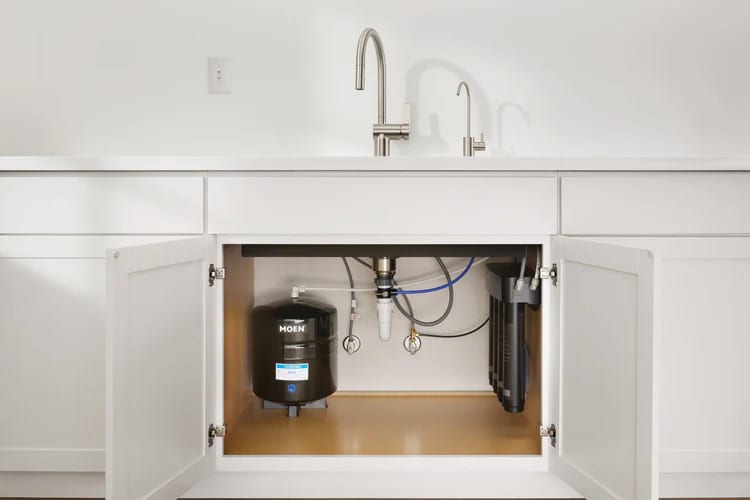
Today’s filter faucets allow users to enjoy cold filtered water directly from their kitchen sink. Photo courtesy of Moen

Leading the charge as an industry
The plumbing trade plays a key role in improving at-home water quality, and it’s essential that professionals receive ongoing training on emerging water threats and the latest filtration technologies. Suppliers should stock National Sanitation Foundation (NSF) certified filtration systems and trade organizations can offer water safety training to their members. As a potential starting point, you can encourage your customers to visit the Environmental Protection Agency’s (EPA) How’s My Waterway website if they have initial concerns about their water quality. This tool provides data to assess the overall health of bodies of water in particular states.
By taking these steps and actively starting conversations with customers, the plumbing industry can play a huge role in protecting public health, keeping customers’ water worries at ease and building a stronger business in the process.